Truth as a Performing Art
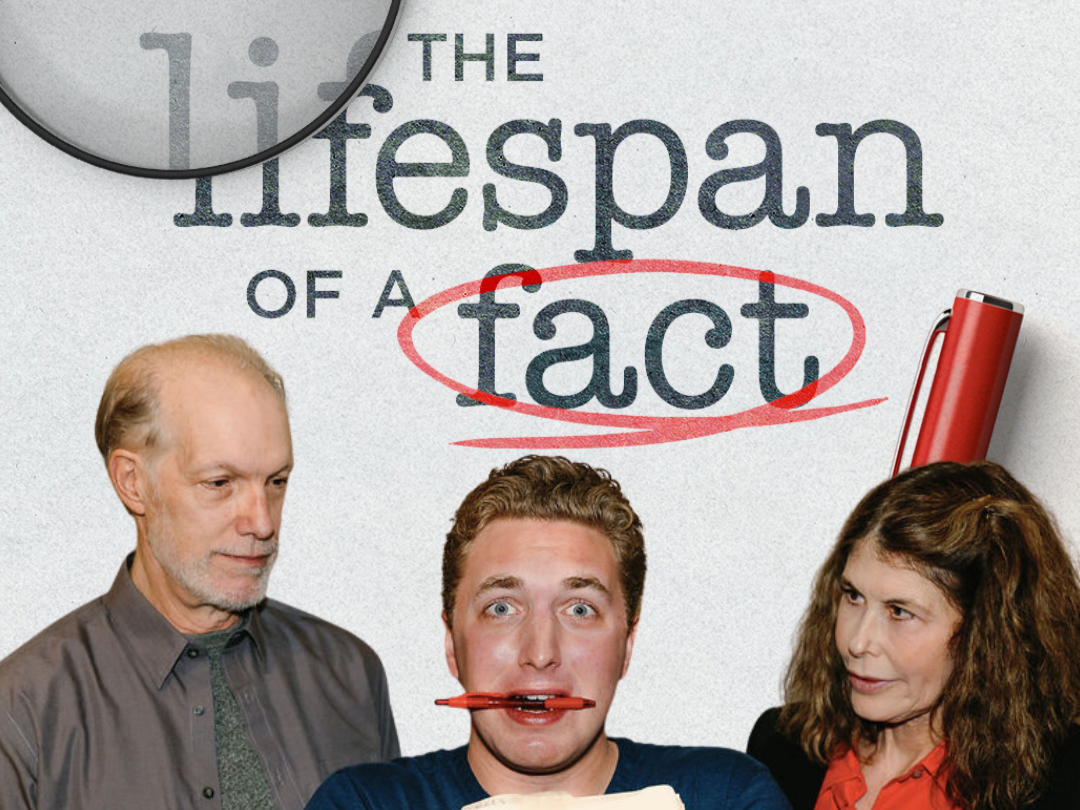
April 9 - 26 at Armour Street Theatre
Wait, did that actually happen? Was he telling the truth? Was that AI? Was this article fact-checked? They said the assertion “needed context.” So it’s kind of true, kind of not?
Or, in more March 2026 terms: Why are we fighting a war in Iran? Is it “very complete” or just getting started? There are 17 explanations from various officials on motivations and expected outcomes. Are any of them true in the minds of the speakers, the listeners, or the millions who stand to suffer regardless of explanation?
In a previous era, truth was a fairly banal binary. True or false. Our papers were factual. Our narrators were reliable. Our movies were either “based on a true story” or they weren’t.
Now, truth is juicy, and the increase in our cultural fascination with truth is inversely proportionate to our society’s ability to deliver it.
As Davidson Community Players did last year with the Sacred Spaces of The Minutes and A Small and Humble Erasure, this year we are presenting two contemporary adult plays back-to-back that wrestle with a debatable, artful idea. And yes, sadly, this year’s debatable, artful idea is truth.
The Lifespan of a Fact, which headlines this series and is 75 sustained minutes of frenetic, hilarious, vein-popping indignation, looks at truth through the lens of the printed word. When I first read it, I was reminded of several hot button books that were exceptional and perhaps even essential on the page but were downright fraudulent behind the scenes. One was the 2003 memoir A Million Little Pieces, a harrowing and immersive addiction narrative that author James Frey embellished beyond our comfort zone. In non-fiction circles, the debate was intense. On the page, it moved us and opened our eyes. If Frey hadn’t been caught, would the positive effect have been worth the inflation of truth? Does a true story need to be completely true in one sense to land with a different kind of truth in another?
Lifespan personalizes this question to blistering effect. Like the greatest new works of American theatre, it does not preach an end interpretation, but rather captures specific, flawed, and humane characters all doing what they think is right but still reaching an impasse. This is not a niche story; it was a successful Broadway play (starring Harry Potter’s Daniel Radcliffe) and cuts right to the core of what’s acutely agonizing about moral purity in our clownishly hypocritical time.
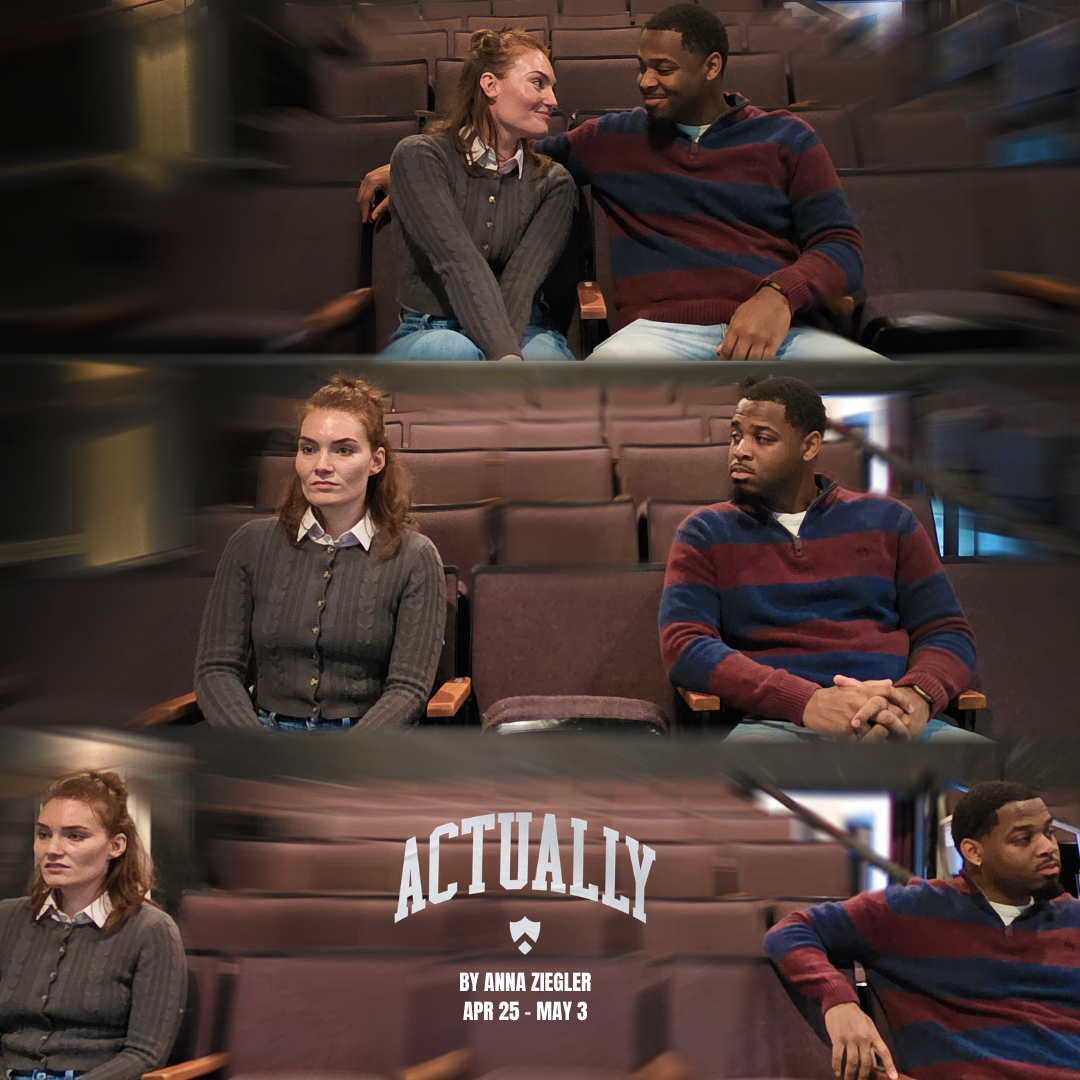
April 25 - May 3 at Armour Street Theatre
Speaking of moral purity, Actually has something to say about this as well. The Trump era has made truth so disorienting that it has become grounding to place our people into buckets of good and bad. Good and “problematic.” Good and “toxic.” The best characters today (i.e. the endlessly messy doctors of The Pitt) defy this reductive thinking, but our isolation and media diets drive us toward categorical judgment in daily life.
Actually zooms in on an instance of this that has been all too common since #metoo. Set on a college campus—technically Princeton, but Davidson will echo strongly—Actually takes two fundamentally decent people and examines the aftermath of their disastrous sexual encounter. It’s the sort of night that, to a student paper or local TV station or college dean, seems easy to summarize in a manner that will exonerate one party, ruin the other, and damage both. But to hear each character in their own words steers us toward a version of the truth that is harder to stomach: we contain multitudes, make mistakes, interpret moments differently, and deserve the grace of ambiguity.
While certainly more “R-rated” and worthy of viewer discretion than Lifespan, I would encourage young people in high school and college to attend Actually. It is a magnificent script that is both cautionary—here’s how to avoid a mess like this—and mournful—how we so ache for singular truth that we cannot tolerate the moments when truth is kaleidoscopic.
Both plays are relatively short, about 75 minutes, so for the first time in DCP history, we are giving audiences a chance to watch them both on the same day. Join us on April 25th or 26th and catch a matinee, get dinner, and then return for the second play. It’s a lot of content about the uncertainty of truth, but I can tell you with factual bravado that this is a series of plays you don’t want to miss. Do you believe me?